
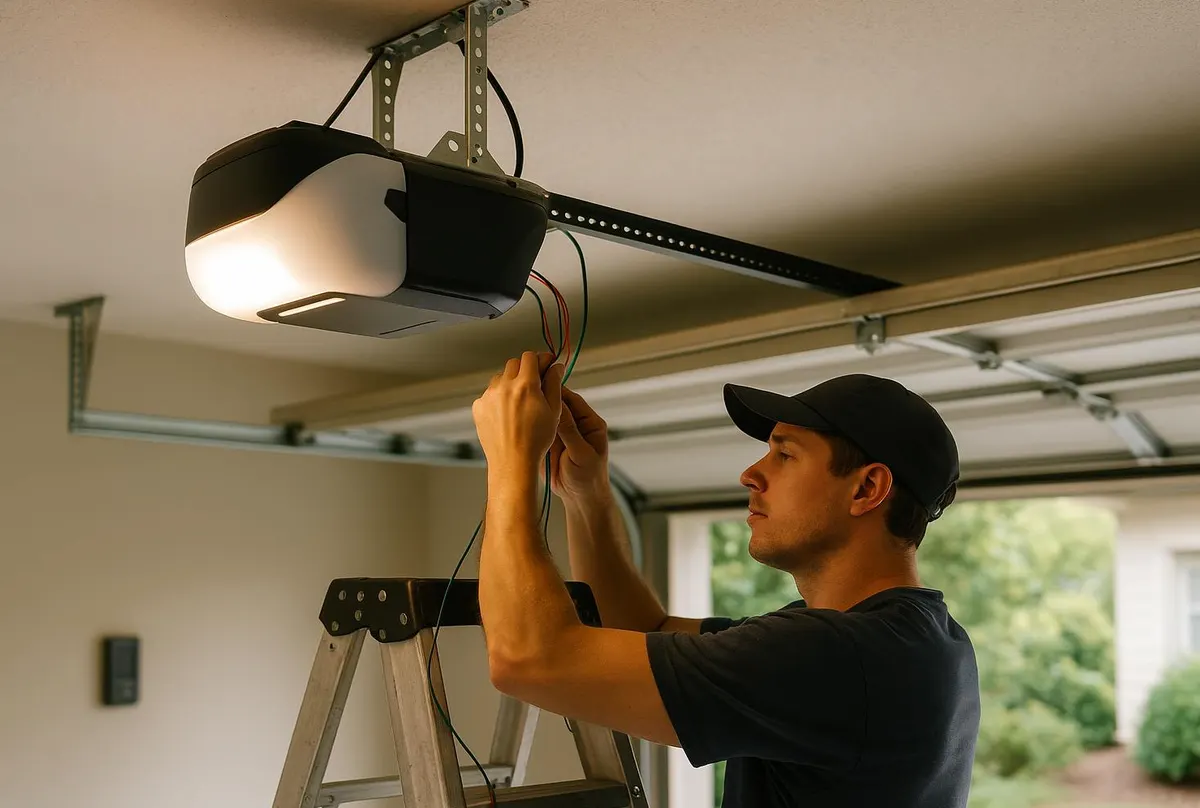
A tech gets called out for a "grinding noise" and walks into the middle of a marriage debate. One spouse is holding up a phone with a "garage door lifespan" search result insisting the door is ancient and needs full replacement. The other is standing by the opener rail saying it just needs oil and twenty more dollars of WD-40. Both are a little right. The truth is that a garage door isn't one thing with one lifespan — it's several parts aging on different clocks, and Florida weather speeds some of those clocks up more than others.
The Parts Age Differently
Here's what actually determines how long each piece lasts:
- Torsion springs are rated in cycles, not years — typically 7,000 to 10,000 open-and-close cycles for a standard spring. For an average household opening the door 3-4 times a day, that works out to roughly 7-9 years. A household with teenagers coming and going, or a door used as the main entrance, burns through cycles faster.
- The door panels themselves (steel, aluminum, or wood composite) can last 15-30 years if the material holds up and the hardware stays in good shape. Steel doors generally outlast wood in humid climates because they don't swell or rot.
- The opener — motor, gears, and the logic board — usually lasts 10-15 years. The motor can often run longer than that, but the circuit board is the weak link, especially where power isn't perfectly stable.
- Cables, rollers, and hinges wear out well before the door itself, often needing attention every 5-7 years depending on use and lubrication.
So when someone says "the door is 20 years old, it's done," that's not quite how it works. A 20-year-old door with a 3-year-old opener and springs replaced two years ago is a very different machine than one that's been untouched since installation.
What Shortens the Lifespan Around Here
Marion County's climate is harder on garage doors than people realize:
- Heat and humidity break down lubricant on springs, hinges, and rollers faster than in drier climates, which means more friction, more strain on the opener motor, and earlier spring fatigue.
- Afternoon downpours and hurricane-season storms bring power surges that can fry an opener's circuit board with no warning — the motor still spins, but the logic board stops communicating with the remote or wall button.
- Moisture swelling affects wood panels and composite doors, causing them to bind in the track or stick at the bottom, which forces the opener to work harder every single cycle.
- Rust creeps into exposed hardware — hinges, end bearing plates, track brackets — especially on doors that don't get wiped down or inspected after wet stretches. This matters more for homes closer to coastal air, but even inland, humidity alone is enough to start surface rust on neglected hardware.
- Skipped maintenance is the biggest multiplier. A door that's never been lubricated or balance-checked ages faster than one serviced on a schedule, regardless of weather.
What Actually Extends It
None of this is complicated, but it does need to happen on purpose:
- Lubricate moving parts (springs, hinges, rollers, tracks) every few months with a silicone-based lubricant — not WD-40, which evaporates and attracts grit instead of repelling it.
- Check the door's balance once or twice a year. Disconnect the opener, lift the door halfway by hand, and let go — it should stay put. If it drops or shoots up, the springs are compensating poorly and wearing out faster than they should.
- Inspect hardware after big storms for rust spots, loose brackets, or bent track sections caused by wind pressure.
- Consider a surge protector on the opener's outlet, since power fluctuations during storm season are one of the more common (and avoidable) ways openers die early.
- Don't ignore small noises — grinding, popping, or a door that hesitates partway through its cycle are early warnings, not background noise to live with.
When to Call Reddick Garage Door Service
If the argument at your house is really "is this normal wear or is something actually failing," that's exactly the kind of question worth getting answered by someone who does this daily. A Garage Door Maintenance & Tune-Up gives you a real answer: we check spring tension, cycle count estimates, hardware condition, and opener performance, and tell you honestly what's got years left and what doesn't. If the issue is a door that's heavy, slow, or won't stay up on its own, that's usually a spring problem, and Garage Door Spring Repair is a same-visit fix in most cases, not a reason to replace the whole system.
If you're in Reddick, Ocala, Belleview, Citra, McIntosh, Micanopy, Anthony, or Williston and you want a straight answer on whether your door needs a repair or a replacement, call Reddick Garage Door Service. We'll settle the argument for you — and fix whatever's actually wrong while we're there.